SynBioBeta Speaker

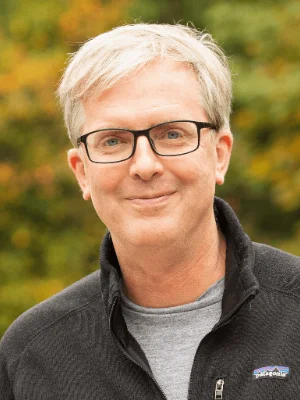
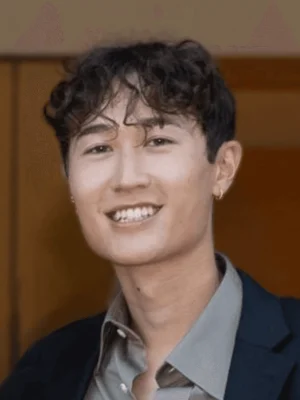
Samuel King

Stanford University

BioEng Doctoral Candidate

Samuel King is a Ph.D. candidate in Bioengineering at Stanford University and the Arc Institute, advised by Dr. Brian Hie in the Laboratory of Evolutionary Design. He researches AI for biology, with the goal of understanding and designing genome-scale systems to improve human and planet health. Samuel works at the interface of computational and experimental biology, recently contributing to efforts developing the genome language models Evo 1 and Evo 2 and leading the creation of the world's first functional AI-generated genomes. He previously earned his M.S. from Stanford and his B.Sc. Hons. from the University of British Columbia.

Sessions Featuring

Samuel

This Year

Breakout Session

•

4:30 PM

-

5:15 PM

Tools & Tech

Genome as a Canvas: Composing Life at Scale

Reading, writing, and editing DNA were just the prelude. The next frontier is composition, designing complex genetic systems and large DNA architectures from first principles using AI-driven models and scalable synthesis technologies. As datasets grow and design tools mature, biology is shifting from incremental editing toward intentional genome-scale engineering. This new paradigm treats DNA not simply as a sequence to modify but as a programmable substrate where genes, regulatory elements, and entire genomic regions can be composed, tested, and iterated like engineered systems. Advances in generative design, large-scale DNA assembly, and precision integration technologies are enabling researchers to construct increasingly complex genetic structures with higher predictability and functional intent. From next-generation recombinases and genome restructuring platforms to AI-guided design workflows that bridge computation and physical DNA construction, the emerging toolkit is redefining how biological complexity is created. The session explores how compositional genome engineering could unlock new capabilities across therapeutics, industrial biology, and synthetic life design.

Featuring

Xiaojing Gao

Stanford University

Assistant Professor

Kaihang Wang

Caltech

Assistant Professor

Building synthetic genomes to create new life forms.

Samuel King

Stanford University

BioEng Doctoral Candidate

Genome language models designing new bacteriophages

Andrew Hessel

Human Genome Project

Chairman

Genome-writing pioneer, Singularity University visionary

Previous Speakers Include